
Treatment Insights
Submandibular Gland Botox: Why a Double Chin Can Remain After Ultherapy or ONDA
Fat is not the only cause of fullness under the chin. Learn how to distinguish prominent submandibular glands from fat, what Botox injections into these glands can do, who it suits, and its possible side effects.

The key point
Submandibular gland Botox may be considered when prominent glands affect the contour under the chin. First distinguish the glands from fat, then review the expected timing and possible side effects.
- How fat and submandibular glands contribute to fullness under the chin
- When to expect changes and who may be a suitable candidate
- Dry mouth and possible swallowing or voice problems
Why fullness can remain after lifting treatments
“Doctor, I have had both ONDA and Ultherapy, but my double chin is still there.” This is something I hear in consultations. If you notice a rounded bulge just below the jawline when you turn your head slightly, prominent submandibular glands may be contributing alongside fat.
Hello, I am Dr. Sijin Park, the director of Layer Clinic. Today, I will explain what the submandibular glands are, what Botox injections into these glands can do, who may be a suitable candidate, and the possible side effects.
How do fat and submandibular glands differ?
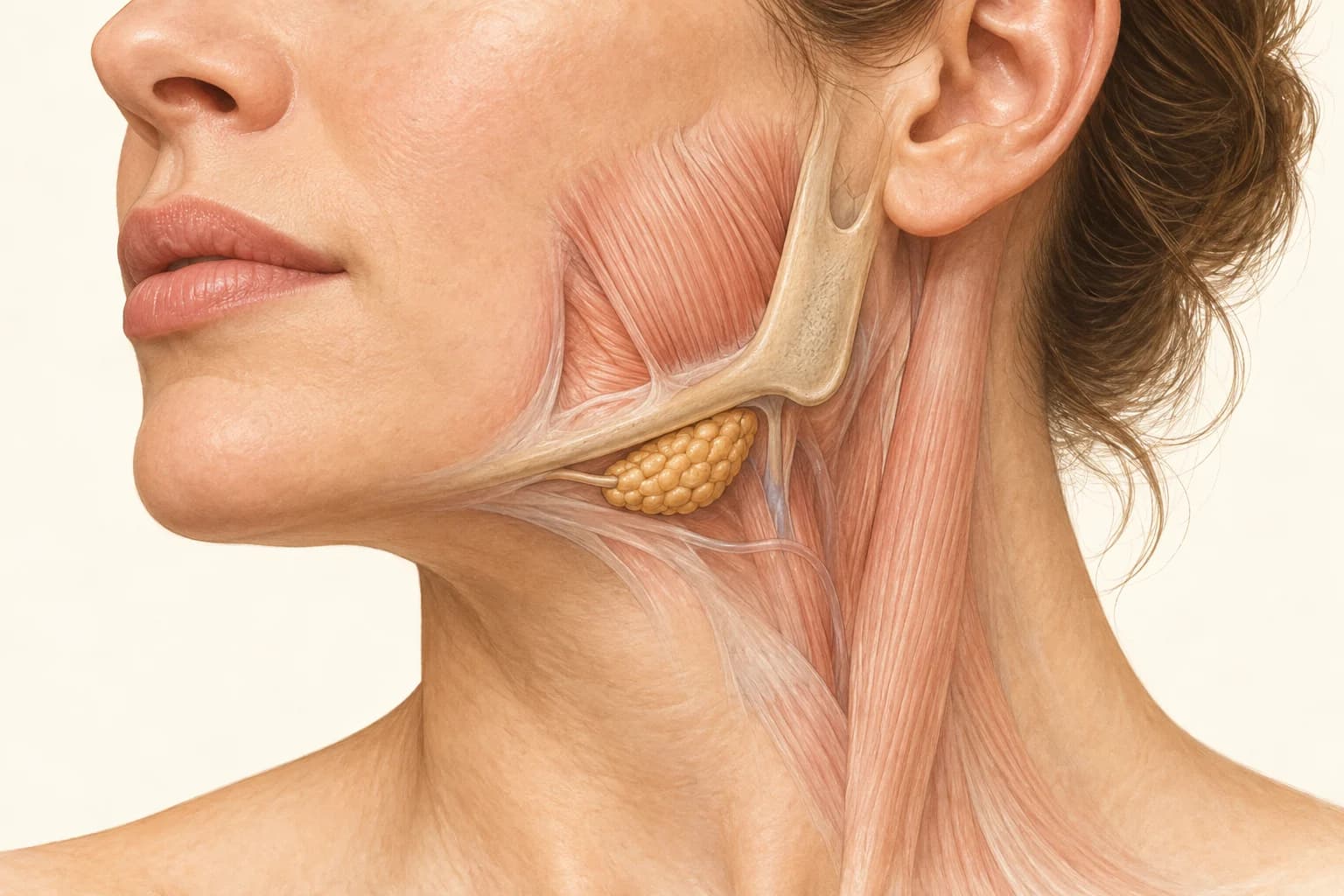
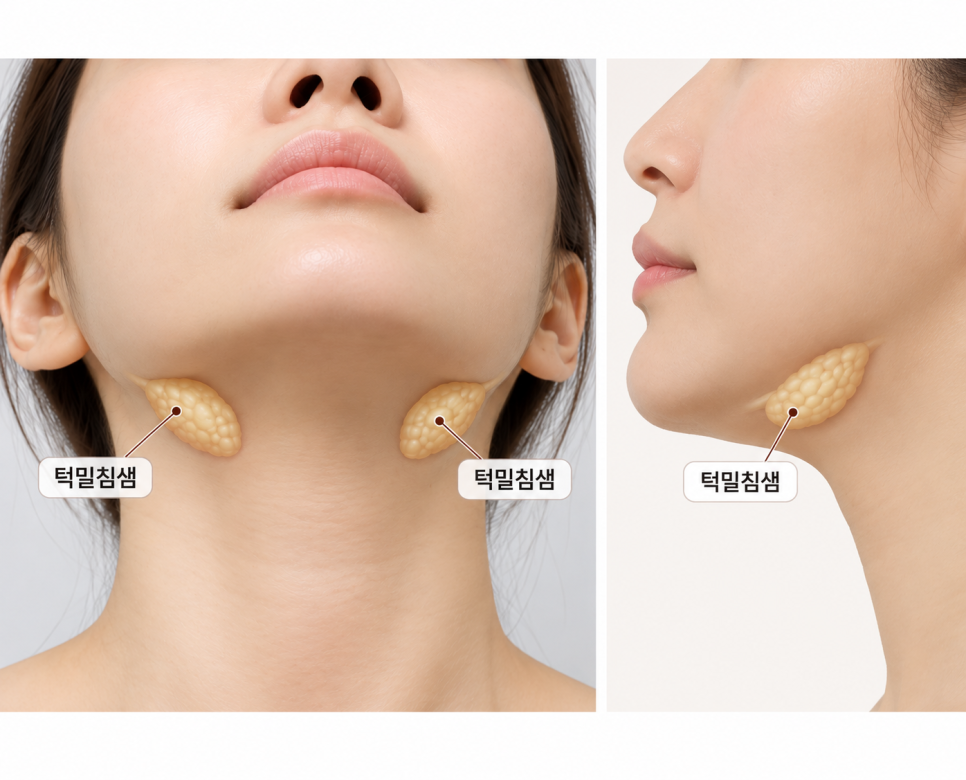
Fat and enlarged submandibular glands are among the causes of fullness under the chin. The submandibular glands produce saliva and lie beneath the jawbone, one on each side.
Fat tends to feel soft and movable, while the submandibular glands feel relatively firm and more fixed beneath the surface. During a consultation, we assess these differences together with their location.
Fullness may remain even after treatments that reduce fat under the chin, such as Ultherapy, ONDA, or fat-dissolving injections. If enlarged submandibular glands are the cause, Botox injections into these glands may be considered to refine the contour under the chin.
Results, treatment intervals, and pain
When used appropriately in people with prominent submandibular glands, the treatment can reduce fullness under the chin and help define the jawline. It targets a different type of tissue than fat-reduction treatments.
- When changes appear: We usually begin assessing changes around two weeks to one month after treatment.
- Treatment interval: Progress is reviewed at around six months to decide whether repeat treatment is appropriate.
- Pain and treatment time: The treatment involves several injections but is brief and can generally be performed without anesthesia.
The key is to first establish whether the glands are actually causing the fullness under the chin, rather than expecting the same change in everyone.
Who is and is not a suitable candidate
When treatment may be considered
- There is little fat under the chin, but enlarged submandibular glands are prominent.
- The submandibular glands appear more prominent after facial contouring surgery.
- You want to refine your facial contour before a photo shoot or similar occasion, and the submandibular glands contribute to that contour.
When treatment may not be suitable
- There is substantial fat under the chin, and the glands are not clearly visible.
- The submandibular glands are not enlarged.
In particular, there is no reason to recommend submandibular gland Botox as a first step if the glands are not enlarged. This is an area people may not usually notice, so identifying which tissue is creating the fullness should come before choosing a treatment.
Side effects to know about
- Dry mouth: Dryness can occur because the treatment acts on glands that produce saliva.
- Bruising, swelling, and bleeding: These may occur at the injection sites.
- Difficulty swallowing: This means having trouble swallowing food.
- Voice problems: It may become difficult to produce sound.
Structures involved in mouth and tongue movement, swallowing, and voice production lie close to the submandibular glands. If the medication affects nearby muscles, swallowing or speaking may become uncomfortable. This makes accurate assessment of injection location, depth, and direction important.
If fullness under the chin remains despite weight loss or several treatments, check whether fat alone is responsible or whether the submandibular glands are prominent. Identifying the cause comes before adding another treatment.
Original article
Salivary gland Botox: Why does a double chin remain after Ultherapy or ONDA? — Layer Clinic blog, October 18, 2026.
What does this mean for your skin?
Tell us about your concerns and treatment history. Your doctor can discuss the options with you.
Ask on WhatsApp