
Treatment Insights
Forehead Botox: Samurai Brows, Prevention and What to Do
An unusually raised brow tail and heavy-feeling eyes after forehead Botox can have different causes. Here is how frontalis anatomy and the C-line inform prevention, and what to do if changes develop.

The key point
An unusually elevated outer brow and heavy-feeling eyes after forehead Botox should be assessed separately. Treatment should be planned around each person's muscle movement and brow position. If changes develop, their cause should be assessed before deciding on a touch-up or observation.
- Distinguish samurai brows from brow and eyelid drooping
- Understand individualized treatment through frontalis anatomy and the C-line
- Know when a touch-up may help and the limits of home remedies
Forehead Botox involves more than wrinkles
I'm Dr. Sijin Park of Layer Clinic. After forehead Botox, some people tell me, “The ends of my eyebrows have lifted and I look angry,” or “My eyes feel heavy and my eyelid crease is less visible.” Although these changes may feel related, their causes and management can differ.
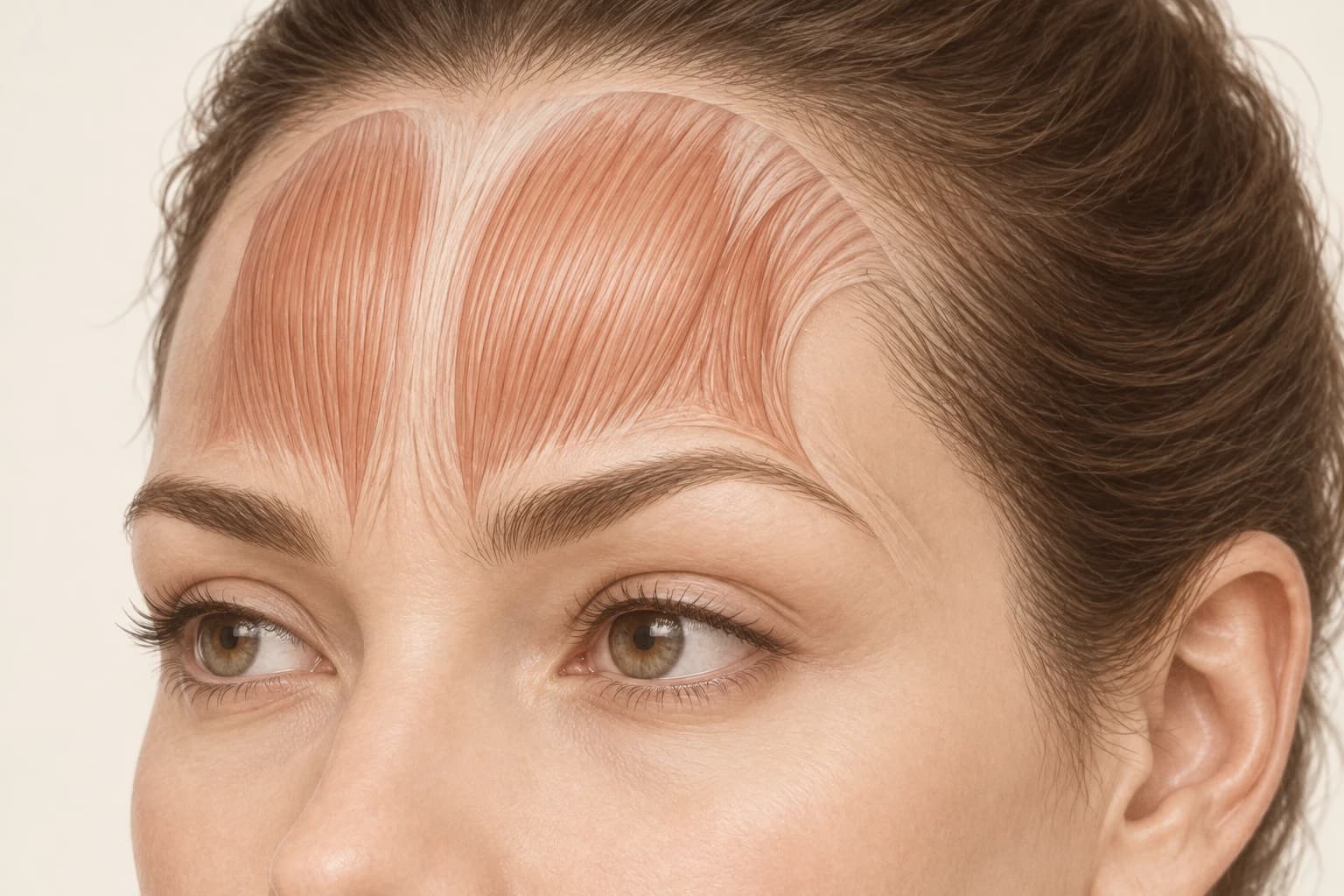
Forehead Botox reduces movement of the frontalis muscle, which creates forehead lines. Because this muscle also raises the eyebrows, brow position and the way you open your eyes matter just as much as how much the wrinkles soften.
Why do samurai brows develop?
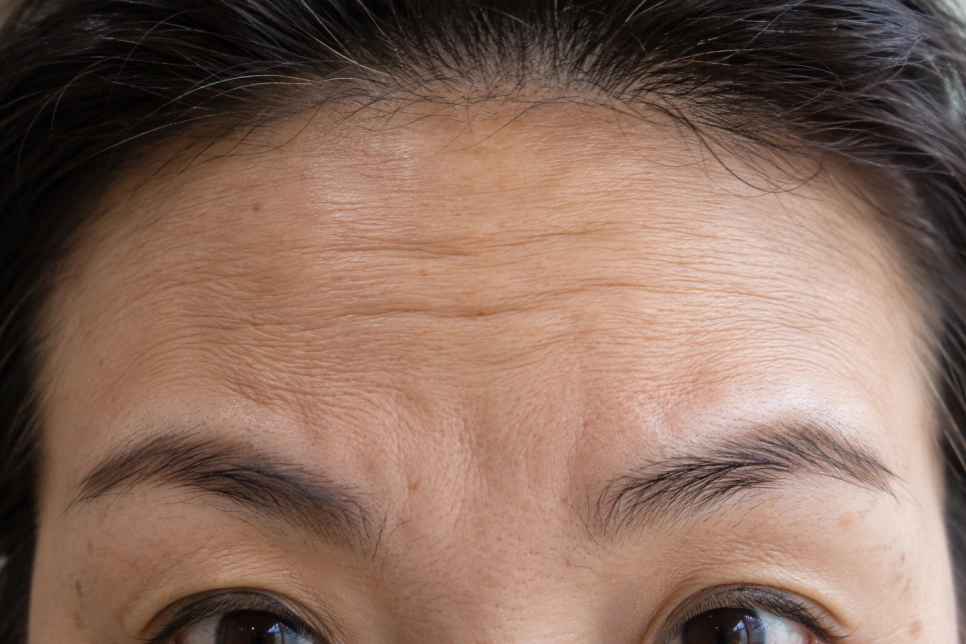
An unusually elevated, pointed outer brow after forehead Botox is often called a samurai brow or Spock brow.
If the treatment effect and remaining movement differ between the central and lateral frontalis, the force lifting the outer brow can become relatively more noticeable. The extent and strength of the lateral muscle deserve particular attention in people with a wide forehead or strong lateral movement.
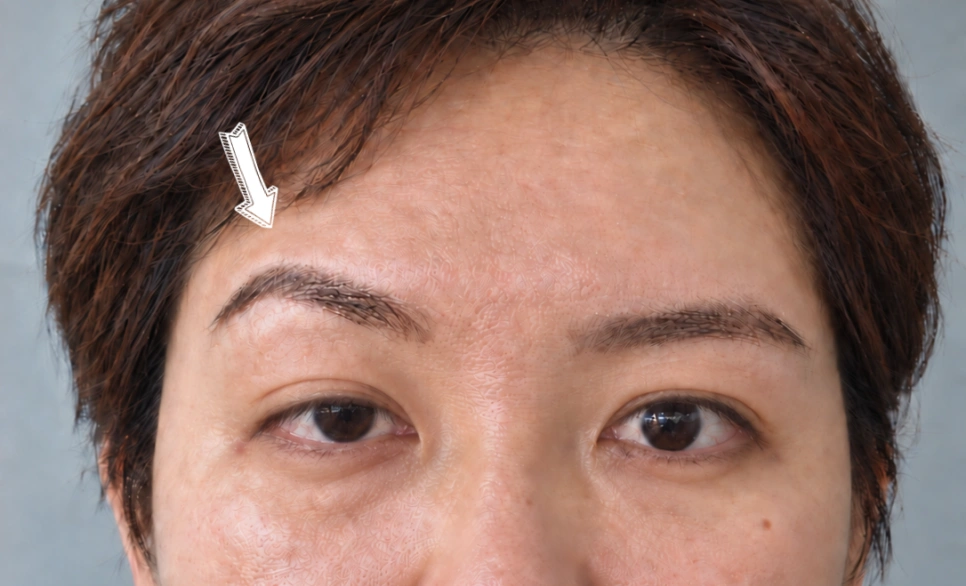
The key is not simply the total amount injected, but where movement has decreased and where it remains. Some people prefer a lifted outer brow, so their desired brow shape should also be discussed before treatment.
Why your eyes may feel heavy or your eyelid crease look less visible
People who normally use their frontalis to lift their eyebrows when opening their eyes may notice heaviness or a less visible eyelid crease when that support decreases and the brows sit lower. Changes deserve particular attention when movement is reduced in the lower frontalis near the eyebrows.
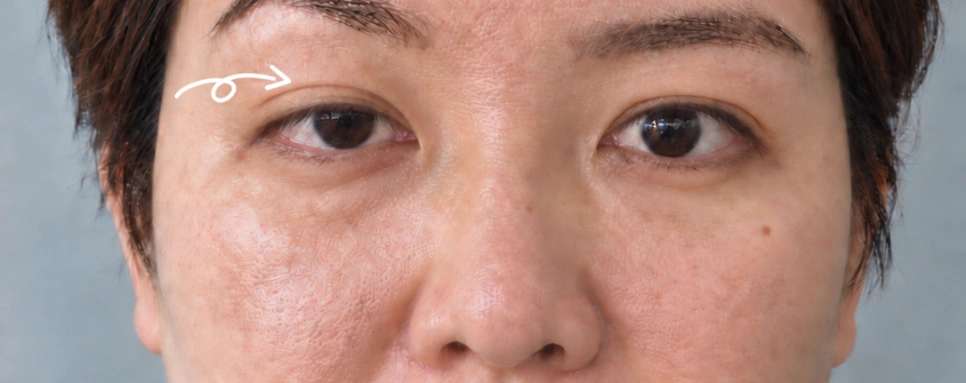
However, a lower brow position and drooping of the eyelid itself need to be distinguished. The treatment can sometimes affect the muscle that lifts the eyelid. The description “heavy eyes” alone is not enough to determine the cause or treatment.
Anatomy and prevention: the frontalis and C-line
The frontalis extends from the galea aponeurotica on the scalp to the skin around the eyebrows. It matters that the muscle attaches to skin rather than bone, and that muscle shape and the strength on each side vary between people.
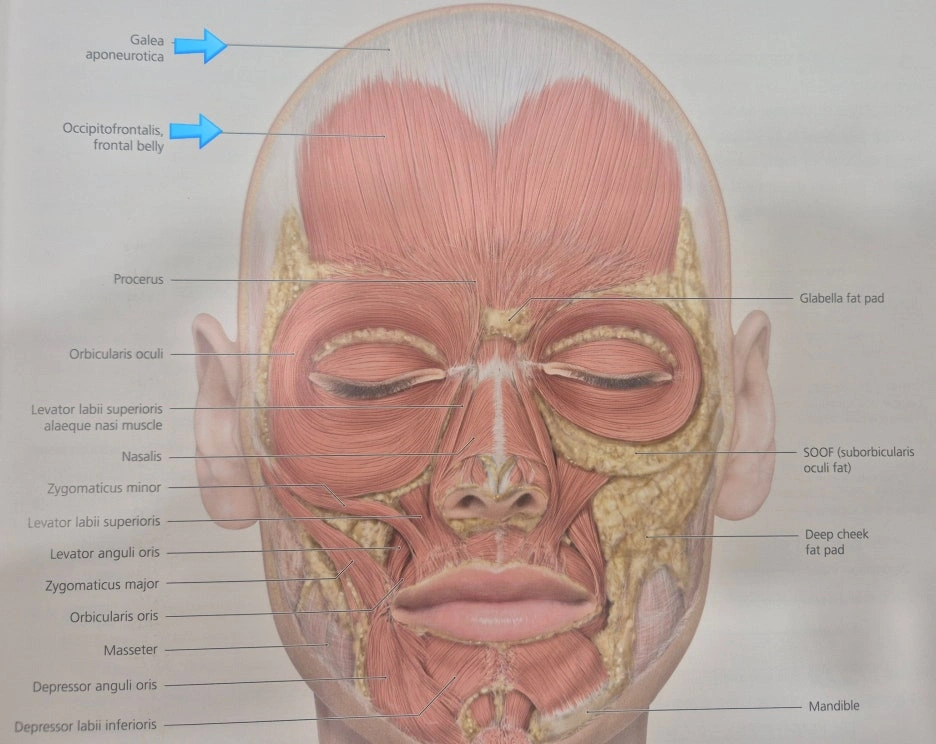
In 2020, Cotofana and colleagues observed forehead skin movement in 27 people. During frontalis contraction, the lower forehead skin moved upward while the upper skin moved downward. They described the horizontal line where these directions meet as the line of convergence, or C-line.
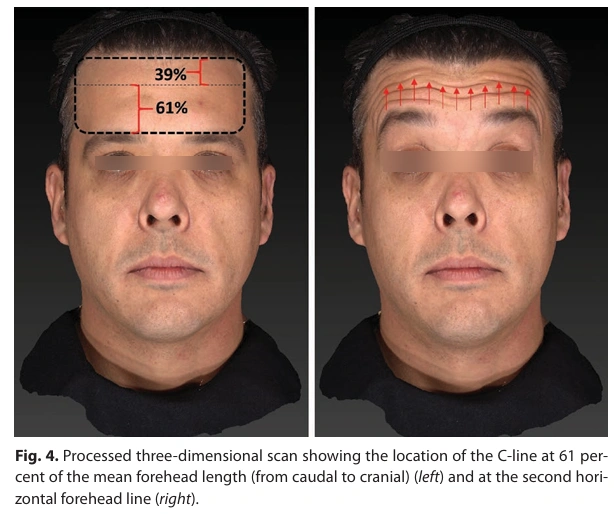
The 61% figure is an average observed in the study. It does not define a universal injection line. Nor does the downward movement of upper forehead skin mean that this region is a separate muscle that directly lowers the eyebrows.
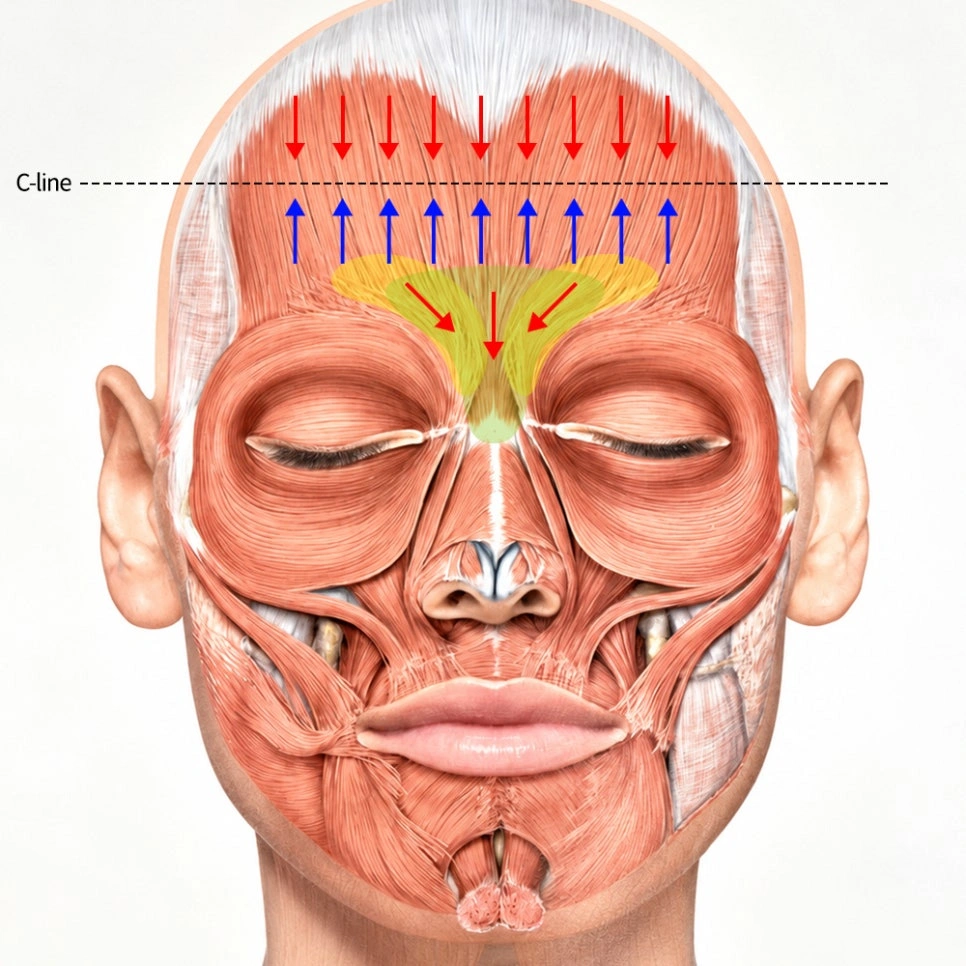
What I want to emphasize is that the entire forehead should not be treated identically. Planning should consider central and lateral movement, brow height, and the balance with muscles around the glabella and eyes.
What should be assessed before treatment?
- How you normally open your eyes: whether you engage your forehead and how much you lift your brows.
- Your baseline brow height and asymmetry: compare the relaxed face with facial expression.
- The extent and strength of central and lateral movement: assess actual movement rather than forehead width alone.
- Your preferred brow shape: discuss whether to preserve it or adjust the lift or lowering of the outer brows.
Injecting only high on the forehead is not a universal solution for heaviness, and the same sites or amounts cannot prevent samurai brows in everyone. Matching treatment to individual muscles and goals is the starting point for prevention, without guaranteeing that adverse effects will never occur.
What to do if changes have already developed
If only the outer brows have lifted
Contact the clinic that performed your treatment to have the brow shape and remaining muscle movement assessed. When appropriate after examination, a small additional amount in the lateral frontalis may help rebalance movement. Not every brow asymmetry calls for the same touch-up, and the timing and degree of change vary.
If your eyes feel heavy or an eyelid droops
First, determine whether the brow has moved lower or the eyelid itself is drooping. These changes generally improve as the effect wears off, but recovery depends on the cause and severity. If discomfort is substantial or your vision is obstructed, seek an examination rather than simply waiting.
Can massage or warm compresses reverse the effect sooner?
There is insufficient evidence that massage, warm compresses or facial exercises make Botox wear off faster. Avoid rubbing firmly or applying excessive heat on your own, and follow your post-treatment instructions. Whether additional treatments such as radiofrequency or muscle stimulation are appropriate should also be decided after examination.
Pre-treatment photographs, the time you first noticed a change, and photographs at rest and with your brows raised can help your clinician compare the course of recovery.
Plan for bruising and follow-up, too
Bruising can occur after injections and may take one to two weeks to settle. Let your clinician know before treatment if you have an important photo shoot or event. Bruising and changes in brow shape should be assessed separately.
Forehead Botox is a familiar treatment, but brow position and facial expression also matter. Assessing your usual movement beforehand and checking changes afterward are both part of the process. If you develop samurai brows or heavy-feeling eyes, contact the clinic that treated you rather than worrying alone.
Original articles and references
- Forehead Botox side effects, samurai brows and management — Layer Clinic blog, October 8, 2026.
- How to prevent samurai brows after forehead Botox: the theory — Layer Clinic blog, October 8, 2026.
- Cotofana S, et al. The Bidirectional Movement of the Frontalis Muscle: Introducing the Line of Convergence and Its Potential Clinical Relevance. Plast Reconstr Surg. 2020;145(5):1155–1162. DOI.
- Cho ES, et al. A Proposal to Prevent the “Mephisto Sign” Side Effect of Botulinum Toxin Type A Injection in Chronic Migraine. Yonsei Med J. 2013;54(6):1542–1544. DOI. This describes one case following chronic migraine treatment and does not establish a universal method or timeline for cosmetic treatment.
This column shares Dr. Park’s clinical perspective. It is not an individual diagnosis or a guarantee of treatment results; suitability and risks are discussed in consultation.
What does this mean for your skin?
Tell us about your concerns and treatment history. Your doctor can discuss the options with you.
Ask on WhatsApp