
Aftercare
After mole or flat wart removal: caring for your skin
From a dressing that comes off to ointments, moisturizers and sun protection: answers to common questions about caring for your skin after mole or flat wart removal.

The key point
After mole or flat wart removal, keep your dressing in place and support recovery with appropriate wound care, moisture and sun protection. Let the condition of the treated area and your individual instructions guide you, rather than changing your routine by the calendar alone.
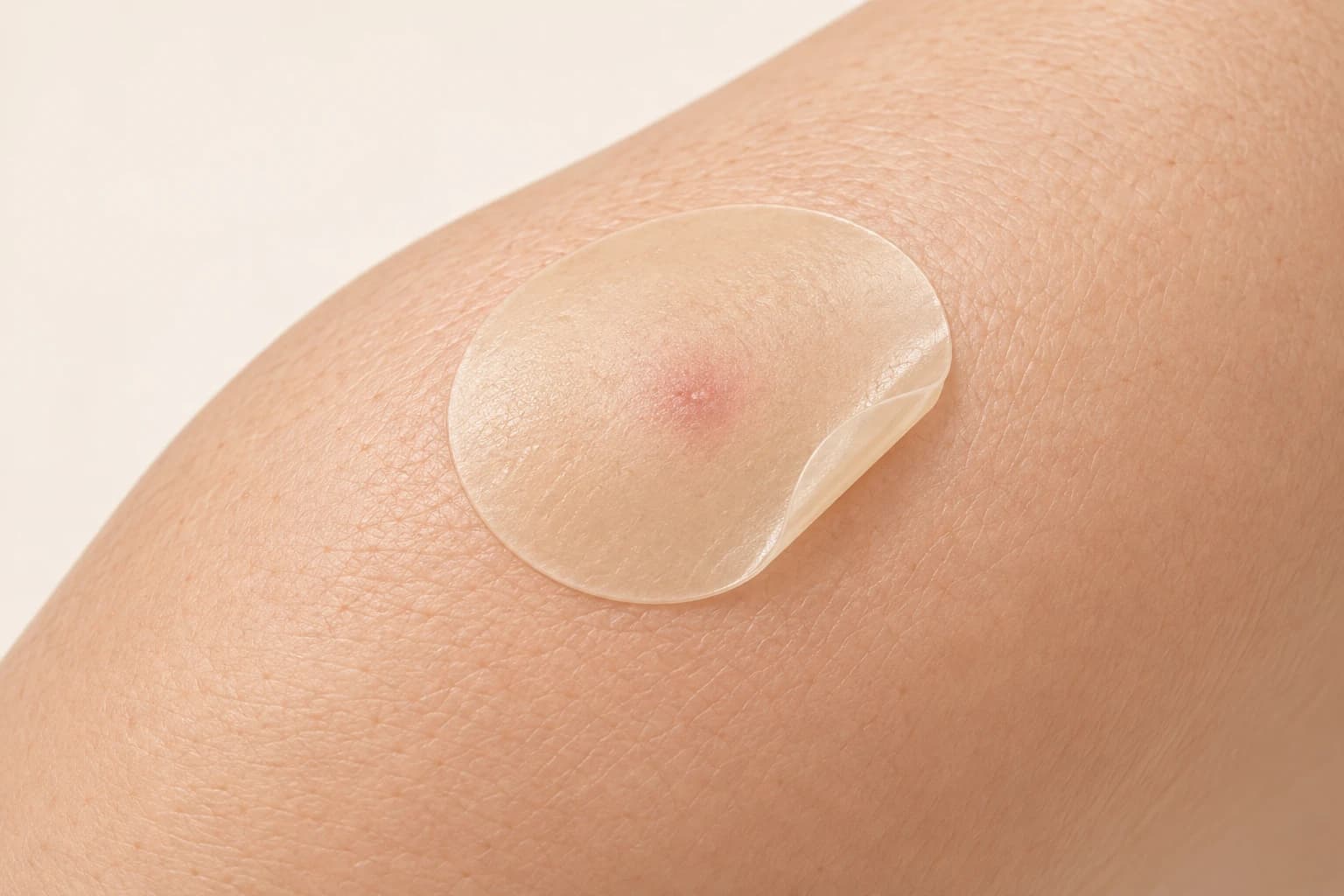
- Keeping a hydrocolloid dressing in place during the first week
- Choosing recovery ointments and moisturizers
- What to do if redness or pigmentation remains after four weeks
Why care at home matters
Hello, I’m Dr. Sijin Park, director of Layer Clinic. After removing a mole or flat wart, the treated skin needs time to recover. The procedure happens at the clinic, but most of the care afterwards happens at home.
We may finish by applying a hydrocolloid dressing, such as DuoDERM or EasyDerm, or use an ointment when the treated area is extensive. Here are some questions I often hear about keeping the dressing in place and what to apply after returning home.
The timeframes below describe a general sequence of care. Recovery and care vary with the depth and extent of removal and the condition of the wound. Follow the individual instructions you receive after your procedure.
The first week: keeping your dressing in place
During the first week, keep the dressing applied at the clinic in place as instructed. Do not deliberately pull it off.
DuoDERM and EasyDerm dressings generally stay in place during washing or showering. Prolonged water exposure or heavy sweating, such as at a pool or sauna, can loosen them.
What if the dressing comes off?
Replacing it with a fresh dressing is one option. If you need to care for the area without a dressing, ask us which ointment and care method suit the wound. Reaching a particular day does not mean every treated area should be managed in the same way.
Do I still need sun protection with a dressing?
UV protection varies between hydrocolloid products. Wearing a dressing does not mean you can skip sun protection for the rest of your face. When and how to apply products directly to the treated area depend on the wound and your care instructions.
Weeks two and three: recovery, moisture and sun protection
The three priorities I want to emphasize are recovery, moisture and sun protection. Support the treated skin as it heals, and pay attention to sun exposure.
Redness or post-inflammatory pigmentation may appear during recovery. The time it takes for pigmentation to fade varies, which is why consistent care matters.
In what order should I apply products?
I explain a routine of moisturizing after cleansing, applying a small amount of the appropriate recovery and moisturizing products to the treated areas, then finishing with sun protection. More important than memorizing an order is whether the products suit the wound and feel comfortable on your skin.
Do not simply apply your usual toner, essence or cosmetics to an area that has not healed. Follow the products and methods recommended after your procedure.
Which recovery ointments can I use?
Here are three examples of recovery ointments available at pharmacies in Korea. This does not mean you should apply all three. Choose and use products according to the wound, the product instructions and advice from your clinician or pharmacist.
Madecassol Gel (마데카솔겔)
This ointment contains a titrated Centella extract. Products within the same brand can have different ingredients, so check the exact product name.
Easyef Saesal Ointment (이지에프 새살연고)
This product contains EGF, or epidermal growth factor. Remember that it requires refrigeration. Check the storage and usage instructions supplied with your product.
Rejuvenex Cream (리쥬비넥스크림)
This recovery cream contains PDRN. We can discuss which option suits the wound and your practical needs.
Moisturizers and sun protection
Bepanthen (비판텐)
Bepanthen, which contains dexpanthenol, is one moisturizing option I discuss. Its thick texture may feel different when spread over the whole face versus applied in small amounts to treated areas.
Aestura Atobarrier MD
This is an option for moisturizing the whole face. Cream and lotion formulations differ, so consider your skin’s condition and how the product feels.
Keep up sun protection
Sun protection is the point I most want to emphasize. Continue moisturizing and protecting your face after recovery. If a product stings or feels uncomfortable, do not force yourself to keep using it; ask us about an option suited to your skin.
After four weeks: reviewing your recovery
Not everyone’s skin is at the same stage after about four weeks. Some people have returned to their usual skin condition; others still have redness or pigmentation.
- If the area has healed well: continue your usual moisturizing and sun protection.
- If redness remains: continue the care you were advised to follow, guided by the skin’s progress.
- If pigmentation appears: it may fade over time, but contact us if it is pronounced or worsening so we can discuss the next step.
Mole and flat wart removal includes the care that follows. Remember these three points: do not pull off your dressing, match your care to the wound’s condition, and stay consistent with moisture and sun protection.
This column shares Dr. Park’s clinical perspective. It is not an individual diagnosis or a guarantee of treatment results; suitability and risks are discussed in consultation.
What does this mean for your skin?
Tell us about your concerns and treatment history. Your doctor can discuss the options with you.
Ask on WhatsApp